8 Nicotine withdrawal symptoms: What to expect and how to cope
- S J
- Jun 29, 2024
- 8 min read

Updated: Apr 23, 2025
There’s no secret that nicotine is incredibly addictive and quitting smoking is not an easy thing to do. You can be aware of the fact that withdrawal symptoms are perhaps the biggest barrier you will encounter. However, don't fear, this is far easier when one understands what will happen and can prepare and deal with it.
Nicotine withdrawal symptoms
1. Anxiety symptoms

Nicotine withdrawal and anxiety are common for several reasons this is because nicotine affects the brain, and some people can feel nervous or anxious when going through withdrawal. This can be a difficult symptom to deal with but it is quite a temporary phase.
The withdrawal symptoms begin after the first twenty-four hours of smoking or using other tobacco products and they involve tension and irritability. Muscle soreness is very familiar to many people, and this is especially so in the neck and shoulder regions. Based on the research done, it emerges that anxiety is one of the most common types of negative feelings at this time. Despite that, you, most definitely, would notice the degree of anxiety rise within the initial three days of your attempt to quit, and it may well last several weeks more.
2. Headache and dizziness symptoms
There are prospective sides, like headaches, that appear while the body gets rid of the nicotine that was previously administered.

The following are signs, which are normally minor and usually appear earlier as well as resolve early. Thus, it can be said that the process of withdrawal in the case of nicotine occurs on physical, mental, as well as emotional levels. The first week is the most difficult especially when you are on days three, four, and five because that is when you get nicotine withdrawal. This is the time when you’re most likely to encounter headaches.
3. Nicotine withdrawal cravings
Cravings are the most recurrent sign that is observed in almost all patients. You will most likely have intense impulses to smoke or to vape.

Nicotine cravings are the last to subside and these could show up as early as thirty minutes after your last cigarette. Cravings are short-term and usually last for 15 to 20 minutes, however, cravings will appear repeatedly throughout the day. In order not to give in to these temptations, certain ‘super-temptations’, such as alcohol or being with smokers, should be avoided altogether and strategies to cope with the particular urge should be identified.
4. Depression symptoms

Depression or hopeless symptoms that arise from nicotine withdrawal an individual can experience when they want to stop using nicotine is usually temporary.
This could be felt right from the day that you decide to quit or it could take a month or so before it fades. In some cases, it could linger longer if you have a history of anxiety or depression; this is if you require your doctor’s help to handle the new symptoms.
5. Irritability and anger during nicotine withdrawal
Cessation of nicotine may result in the development of manifestations of irritability or increased levels of anger. This may be due to symptoms you suffer from being recognized signs of nicotine withdrawal given that your body is in the process of withdrawing from the substance.

At times, you may get annoyed or even angry with yourself because of the physical effects of quitting. This is quite usual and should disappear over time.
6. Difficulty in concentrating
Nicotine is a stimulant and rather affects your brain and without its presence, one might experience difficulty in concentrating or even focusing on a given activity.

Over the next couple of days you may feel slightly lethargic and perhaps a little confused as the nicotine clears from your system.
7. Nicotine withdrawal sleep problems
Besides this, you may develop sleeping disorders or irregular sleeping habits. Follow these tips for better sleep, improved mood, and enhanced health.

If you are a coffee and tea consumer, then you should limit your intake during the day and avoid drinking it in the evening since smoking cessation increases the duration caffeine remains in the body. If one is using a nicotine patch, it may be advisable to remove this patch one hour before bedtime since nicotine might affect sleep.
8. Increased appetite
Several quitters also report a change in appetite, they feel they are hungrier when they do not take nicotine. This can result in the development of obesity, though it can be prevented through sticking to a healthy diet and exercising.

Tips for coping with nicotine withdrawal symptoms
1. Eat healthy snacks

Provides more nutrients
‘Good foods’ for example fruits, vegetables, whole grain products, lean meats, dairy, and others are foods that for Instance are rich in Vitamins, minerals, fiber, and other nutrients that are essential in body functioning.
More energy
Try to target to take healthy foods as they are nutritional and they assist one to have a steady power that will keep them powered for most of the time. High fat and sugar food products are those which you take then momentarily you feel charged up and then you are drained.
Reduces disease risk
This is because food that contains all the nutrients needed by the body, the foods recommended as healthy have been proven to possess low risks of several diseases including those of the heart, diabetes, cancer, and many others. Today, it has become common for individuals to have unhealthy diets, and this causes them to be prone to diseases.
It is time to start mindful living and have healthy snacks to increase appetite without putting on weight.
2. Stay hydrated

Stay hydrated by drinking water that will flush the nicotine out and make your body cope with the new situation.
Body’s fluid balance
Drinking water also meets the need for body fluids balance for the effective functioning of body organs. For instance, research has pointed out that when one is slightly dehydrated, they experience what is referred to as short-term impacts which include; tiredness, headaches, and poor concentration.
Transport nutrients & eliminate waste
Water delivers nutrients to cells and removes wastes from the body in the form of urine, feces, and sweat. Such processes are best enhanced by the consumption of adequate amounts of water.
Temperature regulation
It also has a role in regulating temperature in the body whenever the body melts sweat.
Energy levels
This is a signal of the levels of energy in the body whereby whenever the person is dehydrated, then the cells and energy producing will also be dehydrated. They become easily tired when the body is dehydrated as the metabolism is a little slow and less energized.
3. Stay active
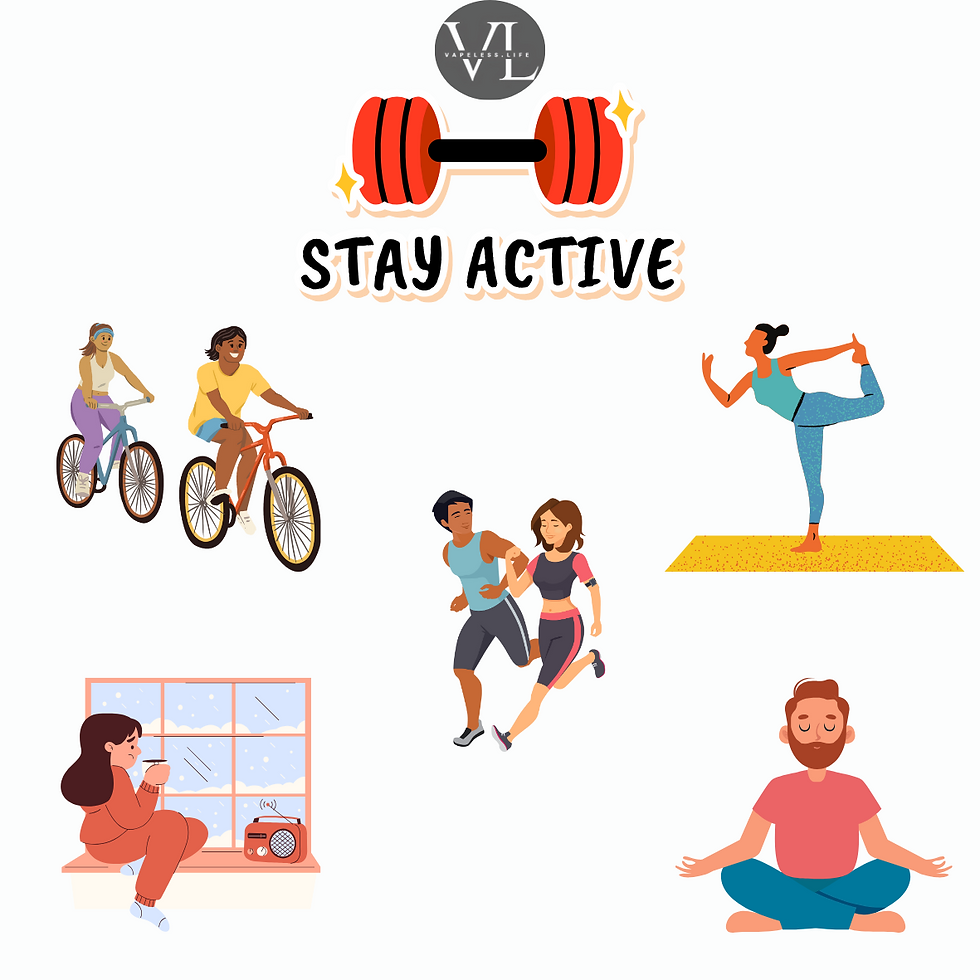
Deep breathing can be useful in eradicating cravings and also enhancing the health of people. Taking time to walk can also go a long way.
Increases the level of energy and overall feelings of happiness.
It leads to increased lifespan and improved quality of life.
It acts as a heart disease cure and serves as an anti-hypertension drug while playing a role in cholesterol balance.
4. Distract yourself

Physically improve yourself keeping your mind occupied so that it does not dwell on the issue at hand. If you are reading, playing a game, or doing a favorite activity, your craving can be cut thanks to distraction.
It is advisable to do the tasks that need your brain after reading an interesting book or before playing an appealing video game as they engage your mind.
Such things as talking to a supportive friend, or going for a walk with someone also work as a good distraction. Social interaction helps.
5. Get support
Talk to friends, partners, and family, or join a vaping support group. The real-life stories help and motivate people to embrace some behaviors because others have gone through similar situations.

Join a face-to-face or an online support group of persons who are also applying the same measures to stop vaping. It is always useful to stay in touch and to communicate with other people who are also trying to quit since it provides a sense of companionship in the process. One can safely share the experience and the problems, tell something about the advice, and encourage others.
When it comes to joining support groups, one can quit vaping apps or enroll in online support groups. These provide direction and support and also means through which the user can be made to plan and assess achievements. Quitting community is indeed very efficient in the sense that you don’t get the feeling of loneliness; in fact, you are more of a concentration.
6. Practice relaxation techniques

A certain method of breathing originating in China is known as Quigong Practice. These practices major on inhaling through the nose and out through the mouth this enhanced breathing and encouraged concentration.
Throughout the years in Japan, the Shakuhachi flute was used by the Japanese monks for suizen, which is blowing meditation. The flute ensures breathing in through the nose and breathing out through the mouth.
Another technique commonly known as Viloma pranayama is one of the ancient yogic practices that are related to controlling the breath and supplying the body with oxygen while taking the toxins out of it. This involves covering one of the nostrils with the index finger then breathing in and then covering the other nostril with the same index finger then breathing out.
7. Plan ahead
Catch yourself thinking about how life will be without nicotine, and how you are personally going to plan for that day without the substance. It may be something that needs to be limited or prevented or simply keeping a plan in mind that can offset the situation.

Start your journey to quit vaping and live a vape-free life by visiting a website https://www.vapeless.life/ dedicated to a vape-free life. You can get a quit vaping plan that is a step-by-step guide you need to follow if you are to quit vaping for good.
Identify your triggers
Provides coping strategies
Plan your journey
Celebrate your achievements
8. Consider nicotine replacement therapy (NRT)
Nicotine-containing chew gum, patches, or lozenges are among the means that can be used to reduce withdrawal effects since the nicotine found is little.
Or

Go for anxiety and stress relief jewelry to substitute your hand-to-mouth motion and take nice deep breaths of calmness.
9. Consult a healthcare professional
If one is experiencing withdrawal symptoms, one should talk to a doctor for more choices and if it is anxiety and a vaping problem, there are support associations too or vaping support groups that can help you.

Discuss nicotine withdrawal signs with your doctor when deciding on what support or drugs will help the body adjust.
Learn about vaping cessation programs and support groups (online or face-to-face) to know what to look forward to and be motivated.
Address the issue of dealing with accompanying anxiety by seeking therapy, anti-anxiety drugs, meditating, journaling, yoga, or a new sport or gym membership.
References
January 3, 2022, “Handling Nicotine Withdrawal and Triggers When You Decide To Quit Tobacco was originally published by the National Cancer Institute.”
Medically Reviewed by Sabrina Felson, MD on September 14, 2023
Written by WebMD Editorial Contributors, "Nicotine withdrawals: Symptoms, Side-Effects and Duration".
Reviewed: September 12, 2023, CDC, "7 common withdrawal symptoms/Quit smoking/Tips from former smokers/CDC"


Comments